Manufacturing as technology industry: Need for new, more skills going forward
Originally published by The Journal Gazette


Rachel Blakeman, PFW Community Research Institute director, and Michael Kirchner, Department of Organizational Leadership chair and associate professor
Manufacturing has been a backbone of the northeast Indiana economy, but what is ahead for these employers and workers? That is what the Don Wood Foundation’s Next-Gen Manufacturing Workforce white paper looks to answer.
DWF hired Purdue University Fort Wayne to collect and analyze quantitative and qualitative data about manufacturing employment in the 12-county northeast Indiana region. This project identified talent-development opportunities and gaps in high school and after graduation and the workplace.
PFW gathered information from manufacturers, educators, and professionals in workforce development support and economic development using an online survey, focus groups, and interviews plus quantitative data.
The Next-Gen Manufacturing Workforce white paper revealed four key themes:
Manufacturing is central to northeast Indiana
Structural barriers hold back the manufacturing eco-system
Manufacturing is a technology-based industry
Tension exists between developing soft and technical skills
The four stakeholder groups overwhelmingly identified manufacturing as very important to their local communities, ranging between 76% to 100% of survey responses. Employment data backs this up. The 12-county region had 23.9% of its total jobs in 2024 in manufacturing, compared 16.5% in Indiana and 8.2% in the United States. LaGrange County was highest at 47.4% and Allen County lowest at 14.7%.
Enthusiasm should be tempered by the declining number and share of manufacturing jobs over time. For example, 32.5% of 1994’s regional jobs were in manufacturing, but it was 25.9% in 2018. More recently, 2019 had 101,074 manufacturing jobs compared to 94,552 in 2024.
Although manufacturing employment is declining, it’s becoming more concentrated when measured by location quotient. LQ measures an industry’s employment density in relation to the national rate, which is always 1.
An LQ of 1.25 or higher is a “traded industry” that brings new money into the economy. In 1994, local manufacturing LQs ranged from 1.4 to 3.53 but 30 years later it was between 1.79 and 5.77, making it far more concentrated than the national rate. NEI-12’s manufacturing density is some of the highest in the country. These numbers should be interpreted as a potential liability, revealing lack of industry diversification.
A surprising learning was the number of manufacturing small businesses. While large employers like General Motors or Steel Dynamics get headlines, about 75% of manufacturing locations here have fewer than 50 employees and between 20% to 25% have no more than four employees. Unlike employment totals, the number of manufacturing establishments has stayed steady over time regionally, showing how enduring manufacturing’s presence is.
Skilled labor shortages reflect structural challenges, not temporary market fluctuations. Employers reported more applicants since the pandemic but they often lack technical skills or manufacturing experience. Manufacturers also saw a disconnect between their needs and schools’ learning outcomes that don’t align with workplace expectations.
Schools aren’t without difficulties. While off-site work-based learning is popular for students and employers, transportation may not be available. Students under 18 years old are severely limited in what jobs they can do.
NEI-12 needs defined regionally-aligned career pathways that guide individuals from education and training systems, starting in middle school or earlier. Many students decide before high school that manufacturing isn’t for them, either from gender-based assumptions or outdated facts. Schools have difficulty finding qualified technical instructors due to lower pay compared to manufacturing roles with similar expertise.
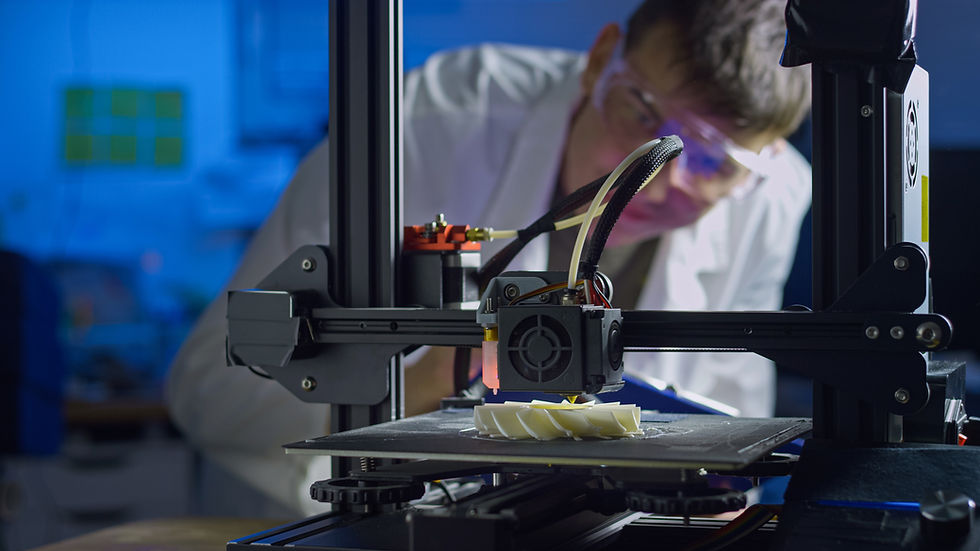
In 2026 manufacturing is a technology business. More than half of manufacturers in the survey said they use automation or robotics and 3-D printing or additive manufacturing now while 76% expect to use artificial intelligence and 53% said advanced software applications in the next five to 10 years.
New technology requires more-skilled workers. In the surveys, high-skill production roles, maintenance and repair, and engineering were listed as both the greatest need and the hardest to fill. In short, many manufacturing jobs need credentialing but not a bachelor’s degree, except engineering.
Employers and educators are challenged in balancing the need for skilled workers and how to accomplish that. Employers feel strapped in trying to send workers off for training, and educators have limited time and equipment to accomplish this level of training.
Manufacturers are concerned technology is moving faster than the local workforce’s ability to use it, creating a competitive disadvantage. Adoption of new IT manufacturing tools like AI, coding, data analytics, or internet of things requires workers who can use these tools, but where will these workers come from?
A challenge is these technology skills are needed on a global scale with virtual reach, placing local IT professionals in a job market larger than northeast Indiana. Homegrown companies should be prepared to compete for workers in ways they haven’t seen.
Tension exists between soft skills and technical skills in manufacturing hiring. Manufacturers said they prioritize hiring for soft or employability skills but their greatest need was applicants with technical skills. In the survey, 45% of respondents said soft skills were “absolutely necessary” while only 6% said technical skills and experience were.
More than half of manufacturers said applicants or new hires lack problem-solving, communication and teamwork plus employees show up late or leave early. Other challenges are lack of related work experience, an insufficient number of applicants, lack of transportation or childcare, and wages and benefits that aren’t competitive.
For education, schools have a disconnect between developing students’ technical aptitudes and interpersonal competencies. Programs prioritize credentials using measurable outcomes. In contrast, soft-skill development is less developed, typically integrated into substantive courses.
The regional economy is transitioning to a higher-skill, technology-intensive manufacturing model requiring adaptability and critical thinking skills. Manufacturing needs advanced skills and continuous learning while the sector’s employment is declining in an otherwise solid job market.
Strategies must prioritize early- and mid-career upskilling and lifelong learning that uses employee training, leadership development, and career-focused education pathways in K-12 and higher education. Strengthening talent retention efforts by connecting students to local opportunities early is critical. This shift can sustain regional competitiveness in an increasingly technology-focused manufacturing landscape.